Meteorological environment monitoring equipment supplier
Insist on doing high-precision customer favorite technology products

Meteorological environment monitoring equipment supplier
Insist on doing high-precision customer favorite technology products

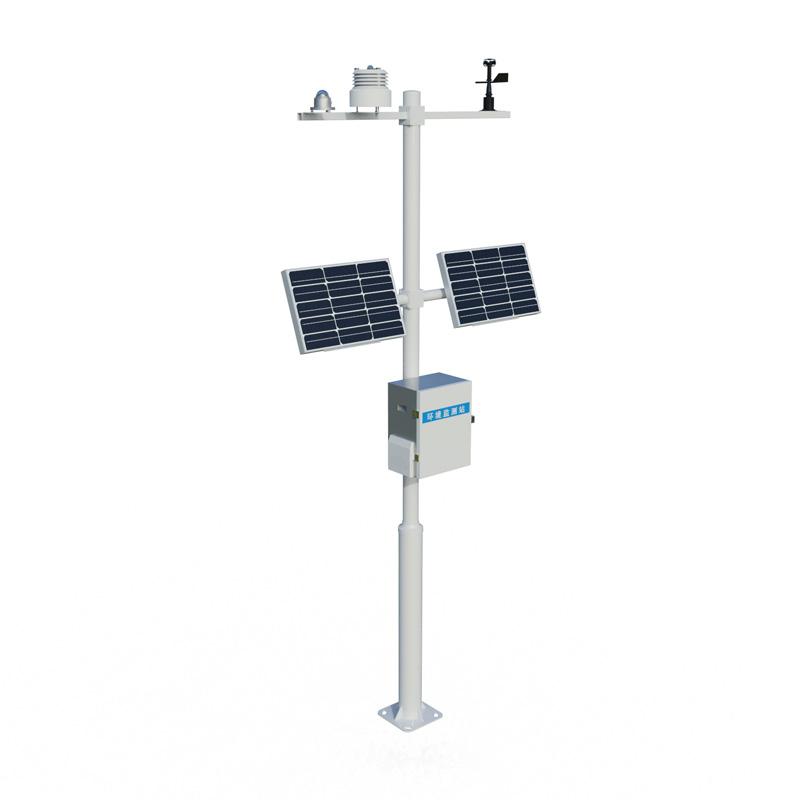
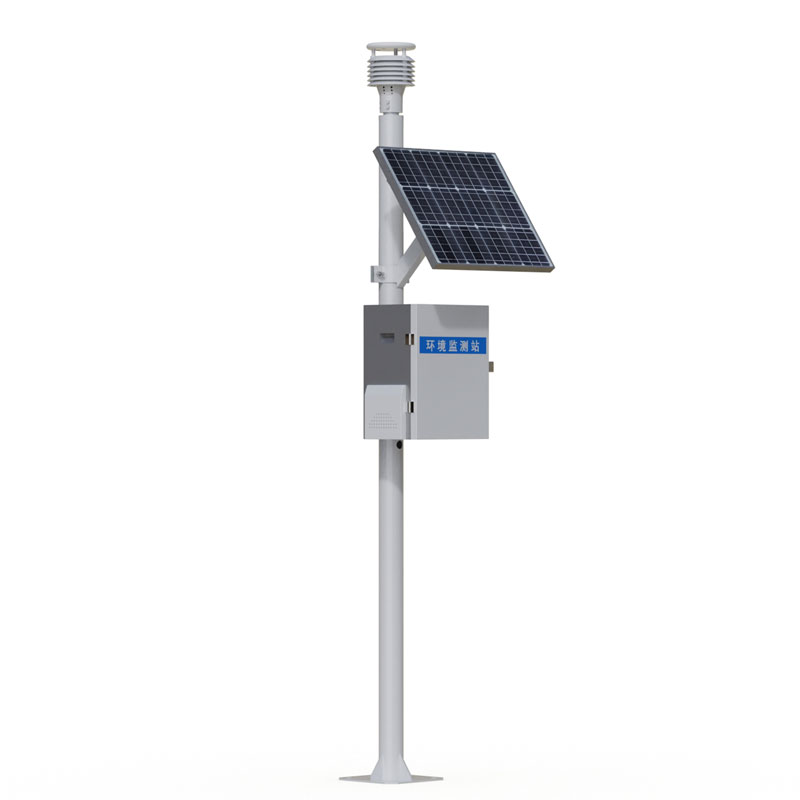
Outdoor Air Quality Monitor enables the real-time observation of various meteorological parameters—including wind speed, wind direction, temperature, humidity, atmospheric pressure, PM2.5, PM10, and noise—facilitating continuous, 24-hour online monitoring. Characterized by stable data acquisition, the system is ideally suited for environmental quality assessment and operational management across a wide range of outdoor settings.
Outdoor Air Quality Monitor comprises a sensor unit, a data collector, and a transmission module. The sensors can be flexibly configured to meet specific monitoring requirements, covering parameters such as wind speed, wind direction, temperature, humidity, atmospheric pressure, PM2.5, PM10, and noise. Utilizing a distributed architecture, the system collects data from sensors deployed at various monitoring points—via either wired or wireless connections—and aggregates it at a central collection terminal before uploading it to a cloud-based platform for storage and visualization. The entire process operates without the need for manual intervention; the device automatically performs scheduled sampling and data reporting, ensuring uninterrupted 24-hour operation.
In practical deployment scenarios, Outdoor Air Quality Monitor is well-suited for outdoor locations with long-term air quality monitoring requirements, such as hospitals and schools. Wind speed and direction data are utilized to assess airflow patterns within ventilation systems, providing a data-driven basis for the commissioning and operational management of these systems. Temperature and humidity monitoring helps determine whether the ambient environment meets the specific requirements for equipment operation or material preservation—a function of particular significance in precision manufacturing and warehousing environments. PM2.5 and PM10 monitoring results provide insights into outdoor particulate matter concentration levels, aiding in the evaluation of the operational efficiency of air purification equipment. Furthermore, noise data is used to verify whether the ambient environment complies with relevant regulatory standards regarding noise levels and acoustic tranquility.
The data platform features a comprehensive suite of functions, including real-time data display, historical trend querying, and report generation. Users can access the platform via desktop computers or mobile devices to view current parameter values at each monitoring point, as well as retrieve data from any specified time interval for in-depth analysis. The platform incorporates a built-in threshold-based alert system; users can define upper and lower limits for each monitored parameter, and the system will automatically push alert notifications whenever data falls outside these predefined ranges, enabling management personnel to address issues promptly. All data is stored chronologically and supports export in tabular formats, thereby fulfilling requirements for routine record-keeping, periodic reporting, and subsequent data analysis.
The device features a robust industrial-grade design, while its sensors demonstrate exceptional stability and consistency, ensuring reliable performance within demanding environments that require continuous, long-term operation. The data acquisition terminal features a data buffering capability, enabling local data storage during network interruptions and automatic re-transmission once connectivity is restored, thereby ensuring data integrity. System maintenance primarily focuses on the periodic calibration of sensors and the inspection of equipment operational status; maintenance requirements are infrequent, and operating costs remain controllable. Through the deployment of this system, users can achieve multi-parameter, all-weather, and continuously stable monitoring and management of outdoor environments.
Sales Manager:Ms. Emily Wang
Tel, Whatsapp:+86 15898932201
Email:info@fengtutec.com
Add:No. 155 Optoelectronic Industry Accelerator, Gaoxin District, Weifang, Shandong, China