Meteorological environment monitoring equipment supplier
Insist on doing high-precision customer favorite technology products

Meteorological environment monitoring equipment supplier
Insist on doing high-precision customer favorite technology products

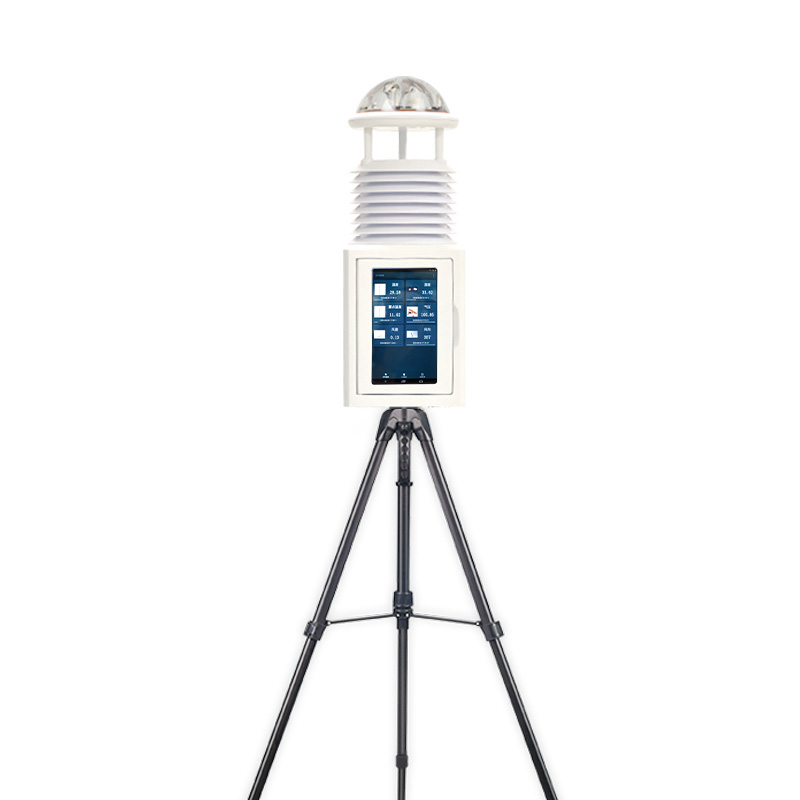
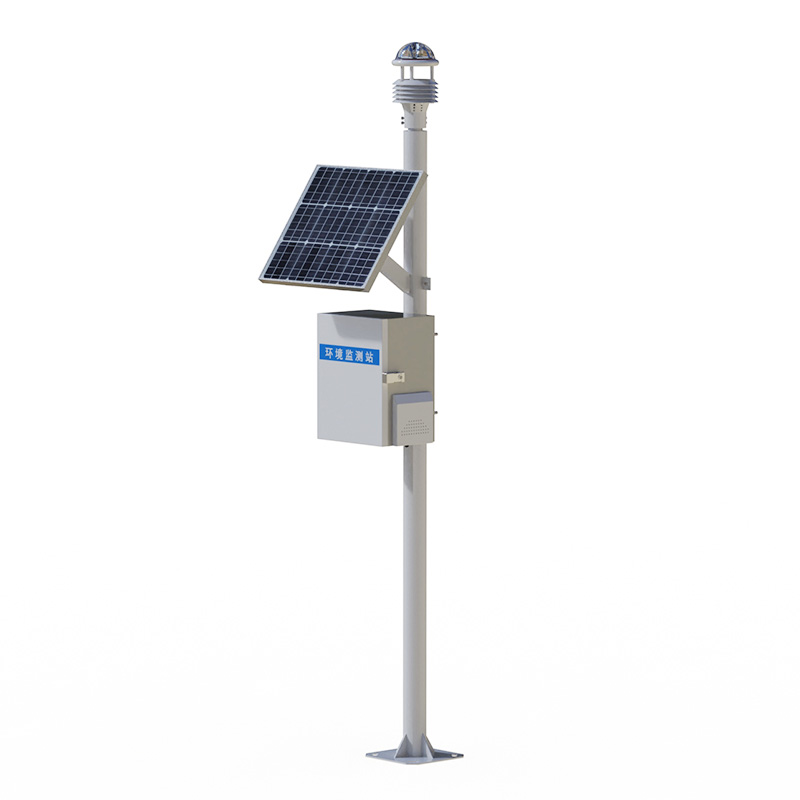
The Environmental weather station utilizes a six-parameter integrated sensor, combining ultrasonic wind speed and direction, temperature and humidity, atmospheric pressure, and optical rainfall measurement. This enables continuous, 24-hour online monitoring of outdoor meteorological parameters, delivering real-time and accurate data.
The Environmental weather station integrates the measurement of six meteorological parameters—wind speed, wind direction, temperature, humidity, atmospheric pressure, and optical rainfall—into a single sensor unit. The device employs ultrasonic principles to measure wind speed and direction; the wind speed measurement range is 0 to 60 m/s, with an accuracy of ±0.1 m/s + 0.01V and a resolution of 0.01 m/s. The wind direction measurement range is 0 to 360°, with an accuracy of ±2° and a resolution of 1°. This design, free of mechanical rotating parts, minimizes the risk of failure caused by wear and tear or foreign object obstruction, making it highly suitable for outdoor environments subject to sand, dust, rain, and snow.
Air temperature and humidity are measured using the diode junction voltage method and capacitive sensing principles, respectively. The temperature measurement range is -40 to 80°C, with an accuracy of ±0.3°C at 25°C and a resolution of 0.01°C. The humidity measurement range is 0 to 100% RH, with an accuracy of ±3% RH within the 20% to 80% RH range and a resolution of 0.01% RH. Atmospheric pressure is measured using a piezoresistive sensor, featuring a measurement range of 300 to 1100 hPa, an accuracy of ±0.25%, and a resolution of 0.1 hPa. Measurements of these three parameters provide essential foundational data for meteorological monitoring, environmental assessment, and agro-meteorological services.
Optical rainfall measurement utilizes photoelectric sensing principles, covering a measurement range of 0 to 4 mm/min with an accuracy of ±4% and a resolution of 0.01 mm. Compared to traditional tipping-bucket rain gauges, the optical rainfall sensor achieves rapid response times without the need for mechanical components, allowing it to capture changes in rainfall intensity in real time. This makes it ideally suited for applications requiring high-temporal-resolution precipitation data. The Environmental weather station features an integrated design that consolidates sensing units for six distinct parameters within a single housing, thereby reducing the installation complexity typically associated with external wiring and the deployment of multiple independent sensors. The device supports standard communication interfaces—such as RS485—enabling seamless integration with data loggers or wireless transmission modules to facilitate continuous, unattended operation. Its capability for 24-hour continuous outdoor monitoring makes it suitable for deployment across a wide range of scenarios—including urban meteorological observation, agricultural soil moisture monitoring, traffic meteorology, environmental surveillance, and new energy facilities—providing a stable and reliable technical solution for meteorological data acquisition.
Sales Manager:Ms. Emily Wang
Tel, Whatsapp:+86 15898932201
Email:info@fengtutec.com
Add:No. 155 Optoelectronic Industry Accelerator, Gaoxin District, Weifang, Shandong, China