Meteorological environment monitoring equipment supplier
Insist on doing high-precision customer favorite technology products

Meteorological environment monitoring equipment supplier
Insist on doing high-precision customer favorite technology products

To enhance driving safety levels on expressways, the 50km Visibility Monitoring Station system is deployed along roadways to provide all-weather, real-time monitoring of visibility as well as weather phenomena such as fog, rain, and snow, thereby furnishing accurate data references for traffic control systems.
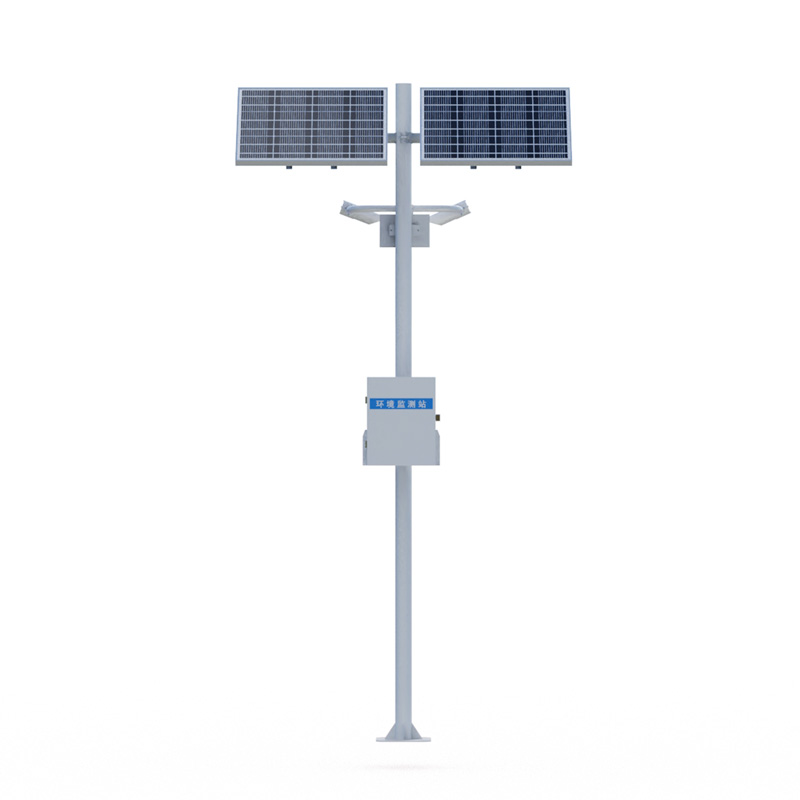
The 50km Visibility Monitoring Station is an automated device specifically designed for expressway traffic meteorology monitoring; typically, it consists of a networked system comprising multiple monitoring stations distributed along the roadway. This system is capable of performing 24-hour automatic monitoring of visibility and current weather conditions along the expressway without the need for manual intervention. Monitoring data is transmitted promptly to a central control center for use by traffic management systems. Under adverse weather conditions, the system can issue timely warning alerts—communicating with both management personnel and drivers through various channels—thereby significantly improving driving safety on the expressway.
The core component of the monitoring station is its visibility sensor, which operates based on the principle of aerosol forward-scattering technology. The device comprises several key components, including an optical transmitter, an optical receiver, and a microprocessor-based controller. The transmitter emits pulsed infrared light, while the receiver simultaneously detects the intensity of the light pulses forward-scattered by aerosol particles present in the atmosphere. All measurement data is collected by the microprocessor controller and converted into Meteorological Optical Range (MOR) values using specialized mathematical algorithms. This forward-scattering visibility meter determines visibility distance by measuring the intensity of light scattered by gas molecules, aerosol particles, fog droplets, and other elements within a specific volume of air.
In terms of technical specifications, the monitoring station features a visibility measurement range extending up to 50 km, with a resolution of 1 meter. Measurement error varies depending on the range: the error margin is ±2% for visibility ≤ 2 km, ±5% for visibility between 2 km and 10 km, and ±10% for visibility exceeding 10 km. The device maintains a repeatability error of ≤ 4%. In addition to measuring visibility, the system can automatically identify five distinct weather phenomena—fog, rain, snow, mixed precipitation, and clear skies—with an identification accuracy rate of no less than 95%.
The monitoring station demonstrates robust environmental adaptability, operating effectively within a temperature range of -40°C to +60°C and across a relative humidity range of 0% to 100% RH. The device is powered by a 12–24V DC supply and consumes a mere 1 watt of power. With external dimensions of 610 x 230 x 360 mm and a weight not exceeding 10 kg, the unit is easy to install and deploy. The system comes standard with GPRS wireless transmission capabilities and supports dual power supply modes: solar power and mains electricity. Monitoring data can be displayed in real-time via a cloud platform, which also facilitates historical data retrieval and export, as well as multi-account login and data trend analysis.
Sales Manager:Ms. Emily Wang
Tel, Whatsapp:+86 15898932201
Email:info@fengtutec.com
Add:No. 155 Optoelectronic Industry Accelerator, Gaoxin District, Weifang, Shandong, China