Meteorological environment monitoring equipment supplier
Insist on doing high-precision customer favorite technology products

Meteorological environment monitoring equipment supplier
Insist on doing high-precision customer favorite technology products

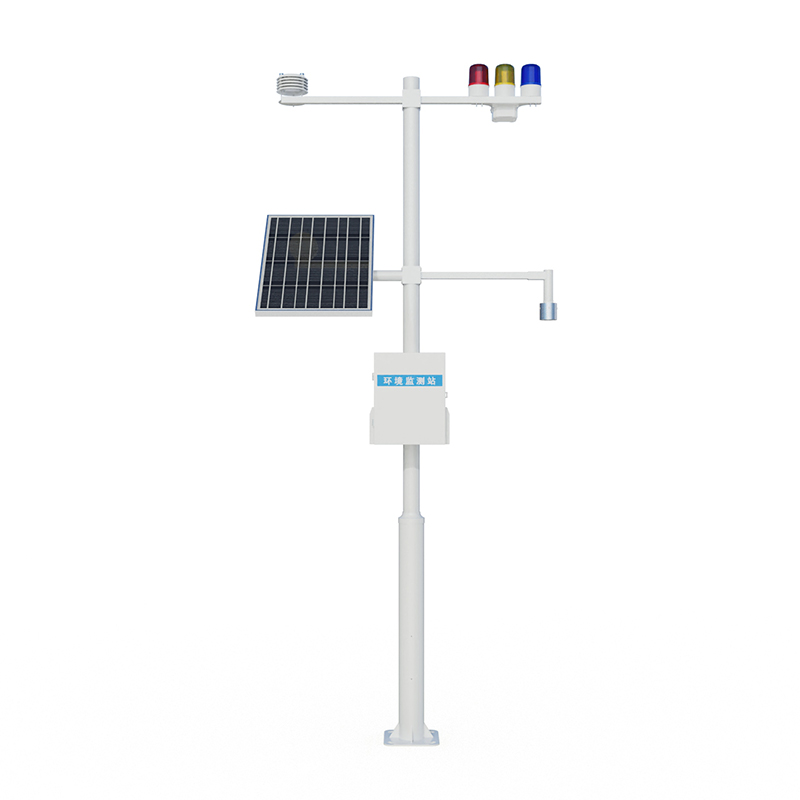
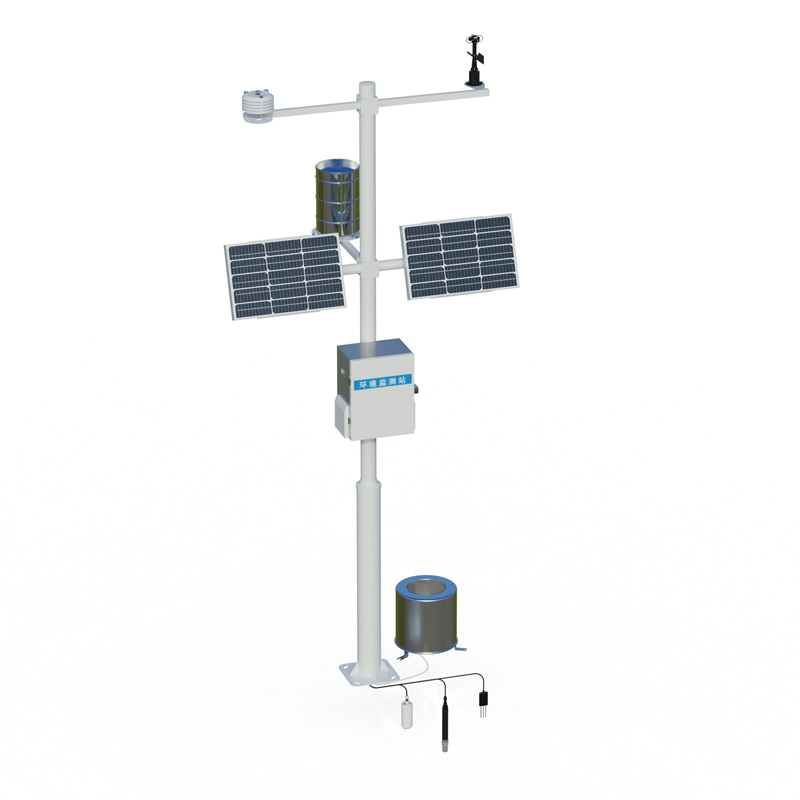
Automatic climate monitoring stations are observation devices that automatically collect, process, and transmit meteorological data. Composed of sensors, a data processing unit, a communication module, and a power supply system, they measure parameters such as temperature and humidity, providing indispensable technical support for weather forecasting, agricultural production, and many other fields.
Automatic climate monitoring stations are core equipment in modern meteorological observation systems. They require no manual operation and can achieve all-weather automatic collection, real-time processing, and remote transmission of meteorological data. Their core components have clearly defined functions: sensors capture various meteorological parameters, covering basic indicators such as temperature, relative humidity, air pressure, wind speed, wind direction, and precipitation; some devices can expand their monitoring range as needed. The data processing unit calibrates and filters the collected raw data to ensure accuracy and reliability. The communication module pushes the processed data to the backend platform through various transmission methods. The power supply system ensures stable operation of the equipment in various environments, commonly using a solar power supply and mains power complementary mode, suitable for remote areas without power grids.
As a key carrier of meteorological data collection, automatic climate monitoring stations have a wide range of applications, spanning multiple fields of public welfare and scientific research. In the field of weather forecasting, the high-frequency, high-precision data it provides is a crucial basis for meteorological departments to analyze weather changes and issue forecast information, effectively improving forecast accuracy. In climate research, the long-term accumulated continuous data helps researchers analyze climate evolution patterns and provides data support for addressing climate change.
In agricultural production, automatic climate monitoring stations can monitor field weather conditions in real time, providing farmers with accurate data on temperature, humidity, and precipitation. This guides farmers in scientifically planning irrigation, fertilization, and disaster prevention activities, reducing the impact of meteorological disasters on crops and contributing to improved agricultural quality and efficiency. In environmental monitoring and water resource management, it can capture regional weather changes in real time, providing data references for ecological environment governance and water resource allocation, promoting ecological protection and rational water use.
Compared to traditional manual observation, automatic climate monitoring stations overcome spatial and temporal limitations, offering higher observation frequency and more accurate data. They can also adapt to various complex environments such as mountains, deserts, and farmland, significantly reducing the workload and errors of manual observation. Today, with the continuous development of meteorological technology, the intelligence level of automatic climate monitoring stations has been continuously improved, and the data transmission efficiency and stability have been continuously optimized. They have become an indispensable technical support for fields such as weather forecasting, agricultural planning, environmental protection and disaster early warning, providing a solid guarantee for the high-quality development of various industries.
Sales Manager:Ms. Emily Wang
Tel, Whatsapp:+86 15898932201
Email:info@fengtutec.com
Add:No. 155 Optoelectronic Industry Accelerator, Gaoxin District, Weifang, Shandong, China