Meteorological environment monitoring equipment supplier
Insist on doing high-precision customer favorite technology products

Meteorological environment monitoring equipment supplier
Insist on doing high-precision customer favorite technology products

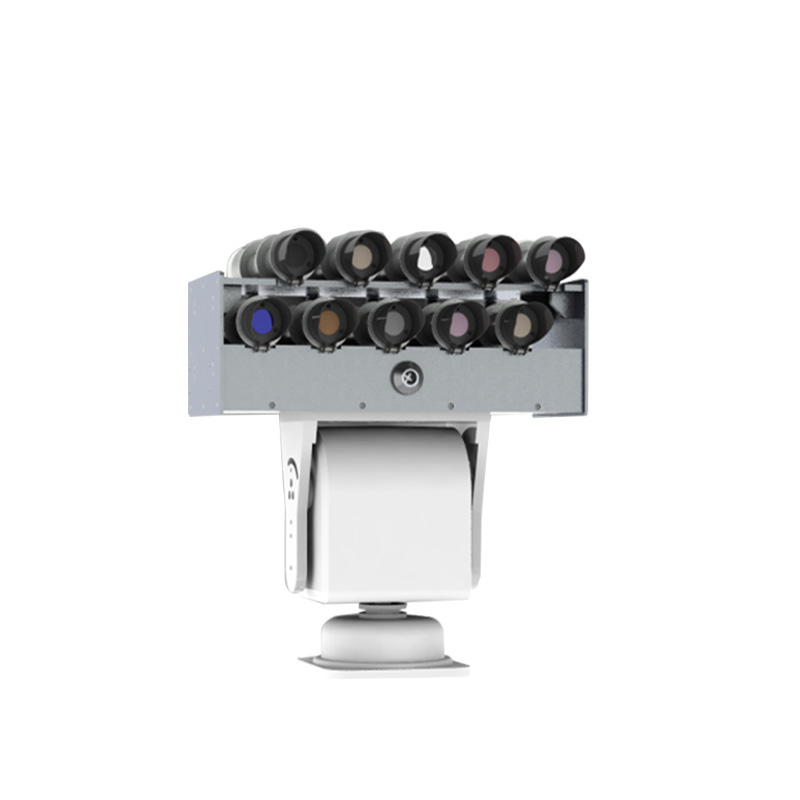
This instrument precisely measures solar radiation across different spectral ranges using a combination of multispectral filters and thermopile technology. It is suitable for measuring aerosol optical thickness and atmospheric turbidity, and is ideal for long-term field assessments of solar energy resources and meteorology.
Spectrometer is a high-precision optical instrument specifically designed for the accurate measurement of solar radiation. It uses built-in multispectral filters or spectral dispersion technology to decompose solar radiation into different spectral bands, and then uses sensitive elements such as thermopile or silicon detectors to measure the radiation intensity of each band separately. This design allows the instrument to acquire data on direct solar radiation, total radiation, and scattered radiation across different bands from ultraviolet and visible light to near-infrared.
In terms of core technology, modern high-precision Spectrometer instruments are typically equipped with a globally adaptive, fully automatic solar tracker. This tracker, using GPS positioning and time calculation, combined with a high-precision stepper motor and four-quadrant detector, can track the sun's position in real time, ensuring that the measurement optical path is always aligned with the sun, with a pointing accuracy of 0.1° or even higher. This positioning technology is crucial for obtaining accurate and continuous radiation data. Simultaneously, to ensure data reliability, many instruments have built-in self-calibration functions, automatically correcting data according to national metrological standards, reducing the frequency of manual maintenance.
In terms of functional applications, Spectrometer primarily calculates key parameters such as atmospheric aerosol optical thickness, atmospheric turbidity, water vapor content, and ozone concentration by measuring solar radiation attenuation in different spectral bands. Therefore, it is widely used in meteorological and climate research, atmospheric environmental monitoring, and satellite remote sensing correction. Furthermore, in the field of solar energy assessment, this instrument, through long-term monitoring of radiation energy in different spectral ranges, can provide fundamental data support for photovoltaic power plant site selection, power generation prediction, and efficiency assessment.
To meet the needs of long-term unattended monitoring in the field, these instruments are designed with high durability and environmental adaptability in mind. Their bodies typically have a high protection rating of IP66 or higher, capable of resisting wind, sand, rain, and corrosion, and operating stably in extreme temperature ranges from -40℃ to 60℃. In terms of power supply, it supports both AC220V and DC12V dual modes, and can even be self-powered using solar panels. Combined with its low-power design, this ensures continuous operation even in remote areas. Data acquisition and transmission are equally intelligent; the instrument supports multiple communication modes such as wireless 4G, wired RS485, or Bluetooth, and can send data to a cloud platform in real time for remote fault diagnosis and data analysis.
Sales Manager:Ms. Emily Wang
Tel, Whatsapp:+86 15898932201
Email:info@fengtutec.com
Add:No. 155 Optoelectronic Industry Accelerator, Gaoxin District, Weifang, Shandong, China