Meteorological environment monitoring equipment supplier
Insist on doing high-precision customer favorite technology products

Meteorological environment monitoring equipment supplier
Insist on doing high-precision customer favorite technology products

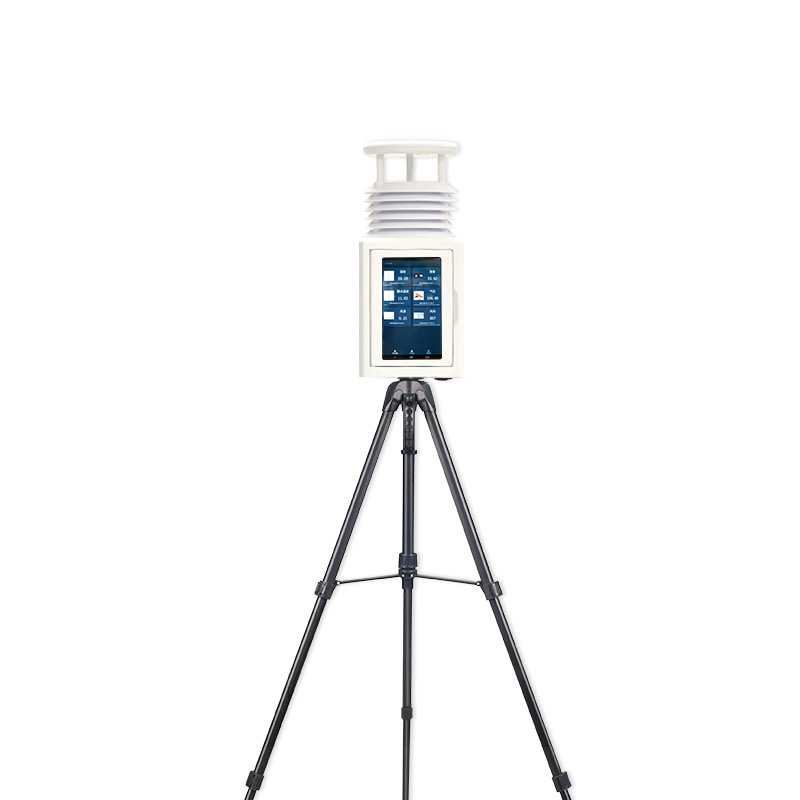
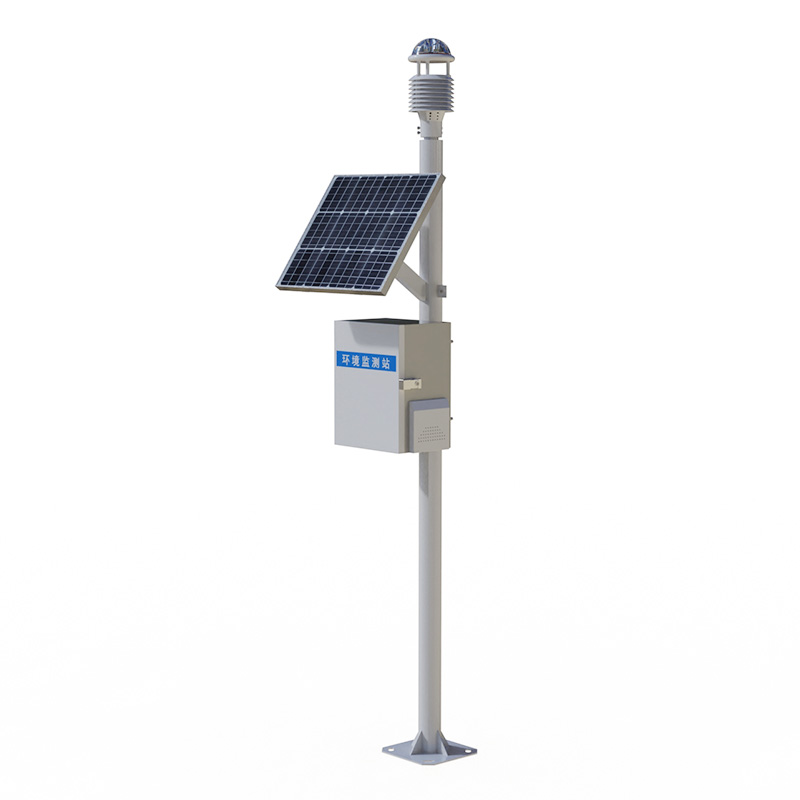
Atmospheric automatic monitoring station can perform real-time observation of elements such as wind speed, wind direction, temperature, humidity, atmospheric pressure, optical rainfall, PM2.5, PM10, CO, NO2, SO2, and O3. This station is applied to weather forecasting, agricultural planning, environmental protection, and disaster warning, relying on sensor technology, the Internet of Things, big data, and artificial intelligence for efficient monitoring and analysis.
Atmospheric automatic monitoring station is an automated environmental monitoring facility that integrates multi-element observation. It can collect key data such as wind speed, wind direction, temperature, humidity, atmospheric pressure, optical rainfall, PM2.5, PM10, CO, NO2, SO2, and O3 in real time. This data is continuously acquired through high-precision sensors, forming a continuous time series, providing a basis for meteorological and environmental analysis.
The core of the monitoring station lies in the application of sensor technology. Each sensor is designed for different elements, such as ultrasonic anemometers for measuring wind parameters, electrochemical and optical sensors for monitoring gas components, and laser scattering devices for detecting particulate matter concentration. Data is uniformly processed by the acquisition module and transmitted to the central platform through the Internet of Things. IoT technology ensures the real-time nature and remote controllability of the data, enabling the monitoring network to cover cities, rural areas, and remote regions.
Big data technology plays an important role in the monitoring station system. Massive amounts of observational data are cleaned, stored, and integrated to form structured datasets. The platform can reveal spatio-temporal changes in pollution, correlations with meteorological conditions, and abnormal patterns through statistical analysis. Further combined with artificial intelligence algorithms, the system can identify pollution sources, predict diffusion trends, and support short-term weather and air quality forecasting.
In terms of weather forecasting, the monitoring station provides real-time ground observation data for numerical model assimilation and forecast verification. Temperature, humidity, atmospheric pressure, and wind data directly support weather analysis and warning issuance. In agricultural planning, the station data helps assess the microclimate of farmland, providing a basis for irrigation, fertilization, and disaster prevention.
Environmental protection is a key application area of the monitoring station. The concentrations of pollutants such as PM2.5, PM10, CO, NO2, SO2, and O3 are monitored in real time, and the data is used to evaluate air quality, trace pollution sources, and support emission reduction decisions. Long-term observation data can also be used to analyze regional pollution characteristics and trends, providing a reference for environmental management.
Disaster warning is another key function. By integrating data from optical rain gauges, wind speed sensors, and barometers, the monitoring station can assist in monitoring weather hazards such as heavy rainfall, strong winds, and cold waves. During pollution events, real-time gas and particulate matter data help in issuing timely health warnings and initiating emergency responses.
In the future, with improved sensor accuracy, expanded IoT coverage, and enhanced artificial intelligence analysis capabilities, the system will further expand in terms of data density, forecasting accuracy, and service scope. Its observation results will not only serve daily meteorological and environmental protection operations but also provide data support for climate change research, urban management, and public health protection.
Sales Manager:Ms. Emily Wang
Tel, Whatsapp:+86 15898932201
Email:info@fengtutec.com
Add:No. 155 Optoelectronic Industry Accelerator, Gaoxin District, Weifang, Shandong, China