Meteorological environment monitoring equipment supplier
Insist on doing high-precision customer favorite technology products

Meteorological environment monitoring equipment supplier
Insist on doing high-precision customer favorite technology products

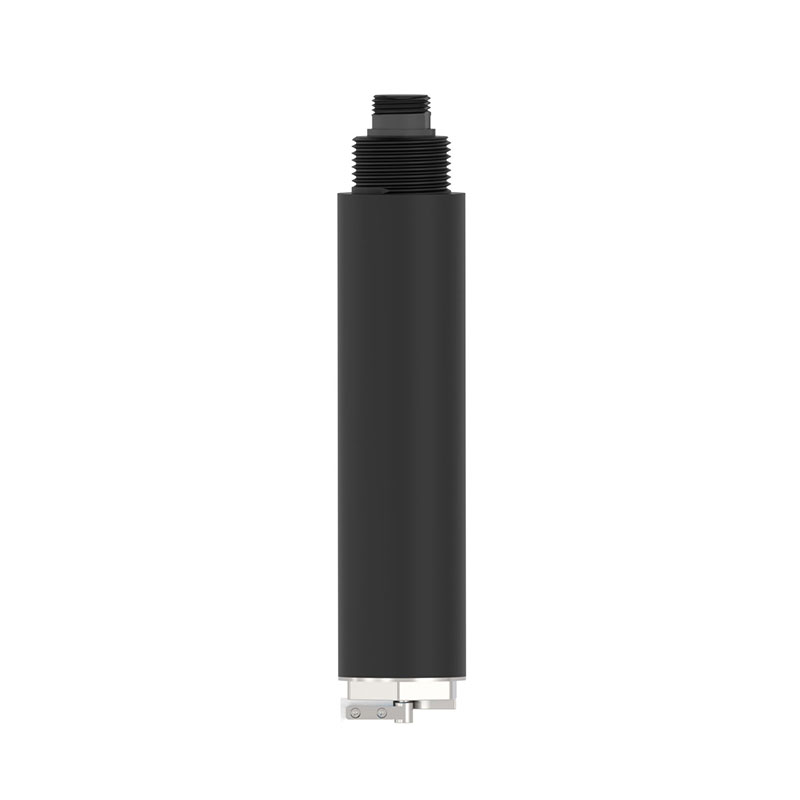
Water Blue Green Algae Sensor Utilizing the specific fluorescence excitation characteristics of phycocyanin, this device measures cyanobacteria concentration by detecting fluorescence intensity generated by a light beam of a specific wavelength. Employing the fluorescence method, it features RS485 signal output with a measurement range of 0 to 200.0 Kcells/mL and a resolution of 0.1 Kcells/mL.
Water Blue Green Algae Sensor The sensor adopts the fluorescence method as its core measurement principle. Its operation is based on the fact that phycocyanin—a pigment contained within cyanobacteria cells—emits fluorescence when excited by light of a specific wavelength. The sensor houses an internal excitation light source that emits a light beam of a specific wavelength to illuminate the water sample. When this beam encounters phycocyanin, the protein molecules absorb the light energy and transition to an excited state; subsequently, they return to their ground state, releasing fluorescence at a characteristic wavelength. An internal photoelectric detection element captures this fluorescence intensity, and through internal algorithmic processing, outputs a numerical value corresponding to the concentration of cyanobacteria.
In terms of performance specifications, this sensor demonstrates characteristics of high sensitivity and rapid response. With a measurement range of 0 to 200.0 Kcells/mL and a detection limit of 1.0 Kcells/mL, it is capable of detecting cyanobacteria even in low-concentration water bodies, thereby meeting the early warning requirements for drinking water sources. The measurement resolution of 0.1 Kcells/mL allows for the precise reflection of even subtle changes in cyanobacteria concentration. A linearity coefficient of R² > 0.999 indicates a highly linear relationship between the sensor's output signal and the algae concentration across the entire measurement range, thereby simplifying calibration and data conversion processes.
Signal output is facilitated via an RS485 interface, adhering to the MODBUS-RTU protocol. This communication method supports industrial fieldbus standards, facilitating seamless integration with various data acquisition terminals, PLCs, or water quality monitoring systems. The sensor can be directly connected to online monitoring networks, enabling multi-parameter integration and remote data transmission to meet the demands of real-time monitoring applications.
The sensor's housing is constructed from a combination of glass, 316L stainless steel, and ABS plastic. The sensor head features optical glass to ensure optimal light transmission and corrosion resistance, while also facilitating easy cleaning and maintenance. The main body is constructed from 316L stainless steel, offering excellent resistance to saltwater corrosion and making it suitable for use in both freshwater and marine environments. Auxiliary components are fabricated from ABS plastic, balancing structural strength with ease of processing. The standard cable length is 5 meters, which can be customized and extended to meet specific installation depth requirements.
In terms of application, the Water Blue Green Algae Sensor sensor is primarily deployed in various water bodies—including lakes, reservoirs, rivers, drinking water source areas, and aquaculture zones—to continuously monitor fluctuations in blue-green algae concentrations. When integrated with multi-parameter water quality monitors or buoy stations, the sensor uploads measurement data to a monitoring platform in real time. This enables administrators to track algal growth trends and implement proactive measures—such as aeration, water exchange, or algal interception—prior to the onset of an algal bloom. With its real-time monitoring capabilities and configurable sampling intervals (settable to minute-level intervals), the sensor can capture both diurnal variations and sudden proliferation events in blue-green algae concentrations, thereby providing continuous data support for effective water quality management.
Sales Manager:Ms. Emily Wang
Tel, Whatsapp:+86 15898932201
Email:info@fengtutec.com
Add:No. 155 Optoelectronic Industry Accelerator, Gaoxin District, Weifang, Shandong, China