Meteorological environment monitoring equipment supplier
Insist on doing high-precision customer favorite technology products

Meteorological environment monitoring equipment supplier
Insist on doing high-precision customer favorite technology products

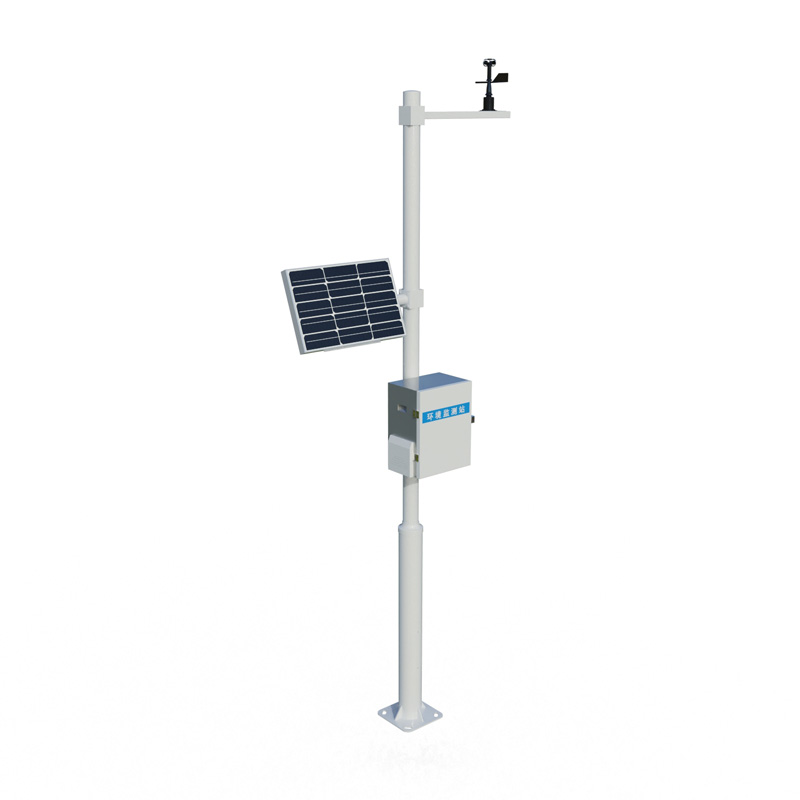
scenic weather station is a device specifically designed for real-time monitoring of negative ion concentration in the air within scenic areas. This system deploys monitoring terminals in key areas such as scenic trails and viewing platforms, enabling continuous 24/7 monitoring and providing scientific data support for environmental quality assessment and visitor services.
scenic weather station consists of on-site monitoring terminals, a data transmission network, and a central management platform. The monitoring terminals have built-in high-precision negative ion sensors that continuously sample and analyze the air at their respective locations. Data is transmitted to the management center via wired or wireless networks, allowing managers to view real-time concentration values, historical curves, and distribution status through a software platform.
The deployment of this system in scenic areas follows scientific planning principles. Monitoring points are typically established along main walking paths, important viewing platforms, visitor rest areas, and areas with dense forest vegetation. These points reflect the negative ion concentration levels in different functional areas and ecological environments of the scenic area. The terminal equipment features outdoor protection design, adapting to various weather conditions and ensuring long-term stable operation.
Implementing negative ion monitoring has practical value for scenic area management. The data obtained objectively reveals the dynamic changes in the air environment of the scenic area, showing concentration differences at different times and in different areas. For example, concentrations in forest areas usually increase significantly in the early morning or after rain. This information helps scenic areas understand environmental quality patterns and assess the health status of ecological resources.
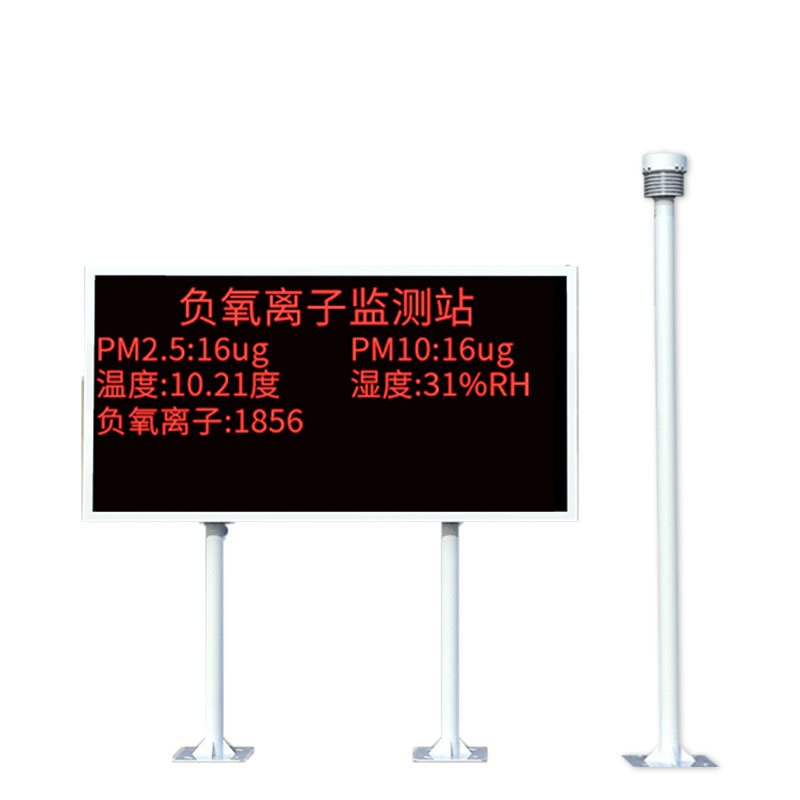
Furthermore, the system also plays a role in visitor services. Real-time concentration data can be published to the public through the scenic area's official website, smartphone applications, or on-site information screens. This provides visitors with intuitive environmental quality references, enhancing the scientific and educational aspects of their visit. Some scenic areas also use monitoring data for health tourism promotion, showcasing their superior natural ecological environment.
From a technical perspective, modern negative ion monitoring systems have functions such as automatic calibration, fault alarms, and data storage. The system can record data at set time intervals, forming a long-term database for annual comparative analysis and trend research. This provides basic data for long-term ecological environment research in scenic areas.
Several aspects need attention in the construction and operation of this system. The location of monitoring points should be representative, avoiding local human interference. Equipment requires regular maintenance to ensure sensor sensitivity and data accuracy. The interpretation and application of data should be based on scientific understanding, avoiding over-promotion or misleading information.
Overall, scenic weather station is a practical environmental monitoring tool. By providing continuous and accurate concentration data, it serves the ecological management, environmental protection, and visitor experience enhancement of scenic areas, becoming a key infrastructure component for modern scenic area management. With the popularization of this technology, it is expected to be applied in more scenic areas in the future, jointly promoting the sustainable development of the tourism environment.
Sales Manager:Ms. Emily Wang
Tel, Whatsapp:+86 15898932201
Email:info@fengtutec.com
Add:No. 155 Optoelectronic Industry Accelerator, Gaoxin District, Weifang, Shandong, China