Meteorological environment monitoring equipment supplier
Insist on doing high-precision customer favorite technology products

Meteorological environment monitoring equipment supplier
Insist on doing high-precision customer favorite technology products

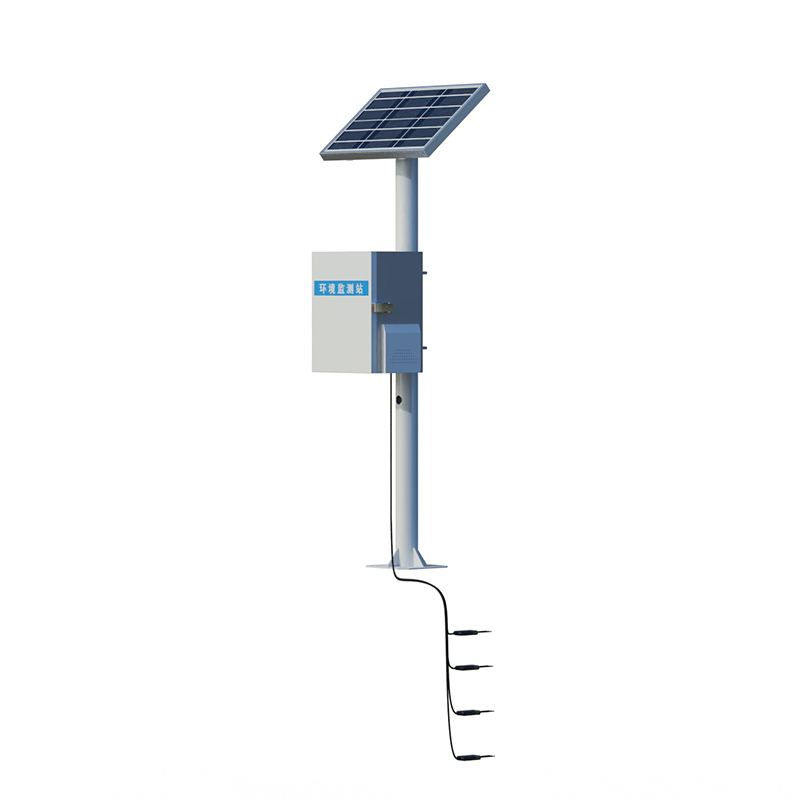
scenic weather station is a device specifically designed for continuously monitoring the concentration of negative oxygen ions in the air. This system operates 24/7, transmitting monitoring data in real time. In addition to core negative oxygen ion monitoring, the instrument can be equipped with various sensors as needed, expanding monitoring to include meteorological and environmental factors such as air temperature, humidity, PM2.5, and PM10. It is suitable for various fields, including forestry management, tourist attractions, parks and green spaces, environmental protection, meteorological observation, and agricultural research, providing users with customized real-time environmental monitoring and data publishing solutions.
scenic weather station is an important tool in modern environmental monitoring systems. Its main function is to accurately and continuously measure the concentration of negative oxygen ions in the air of a specific area. Negative oxygen ion concentration is one of the key indicators for measuring air freshness and environmental quality, and is particularly valuable in natural ecological areas. The device is robustly designed to withstand various outdoor weather conditions, enabling true all-weather monitoring and ensuring the completeness and continuity of data recording.
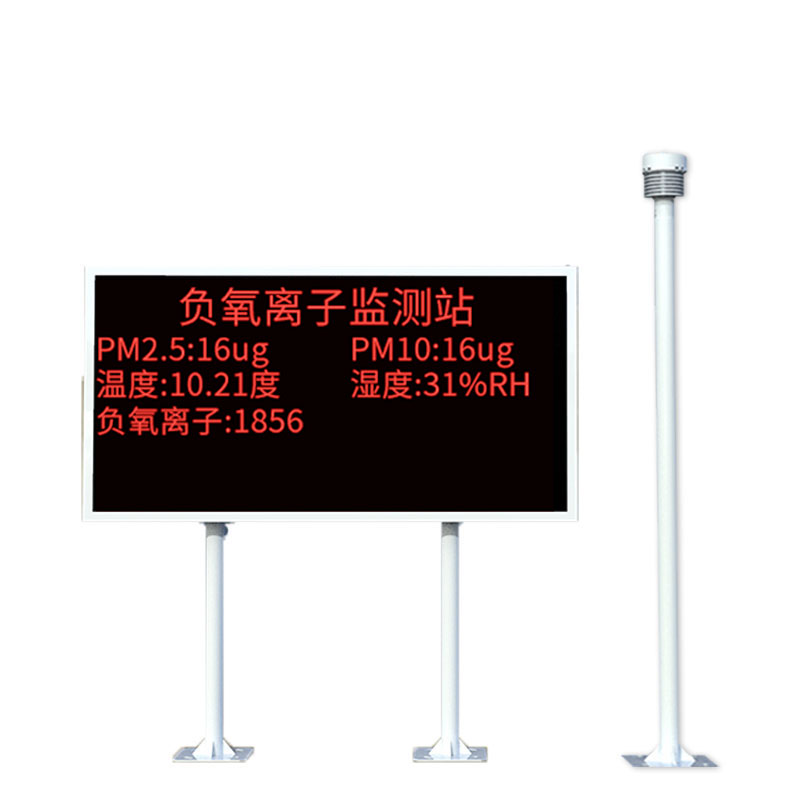
The core advantage of scenic weather station lies in its high scalability and flexibility. The standard configuration focuses on the real-time collection and transmission of negative oxygen ion concentration. When users require more comprehensive data, additional monitoring modules can be easily integrated into the main device platform. Common expansion options include temperature and humidity sensors for measuring air temperature and humidity, and PM2.5 and PM10 sensors for monitoring the concentration of fine particulate matter in the air. Users can freely select and combine these elements based on their project budget and actual monitoring priorities to build a comprehensive environmental monitoring station that meets their personalized needs.
In practical applications, this instrument serves multiple professional fields. In forestry and ecological research, it helps researchers to observe the air ion levels of forest environments and their changing patterns over the long term. For tourist attractions, nature reserves, and urban parks, real-time monitoring and publicly displayed negative oxygen ion data can become an ecological highlight to attract tourists, visually demonstrating the high-quality air environment of the area. Environmental protection departments can use it for regional air quality assessment. Meteorological departments can use it as a supplement to their observation network to obtain local microclimate data. In the field of precision agriculture, the system can also assist in analyzing the relationship between field microclimate and crop growth.
The system's customization features are significant. Users are not passively accepting a fixed configuration, but can actively propose their needs and add or remove monitoring parameters. This means the monitoring station can be both functionally streamlined and cost-effective, while also achieving multi-functional and highly integrated comprehensive observation. This design philosophy ensures the maximum utilization of equipment resources and is suitable for projects at different levels, from single-indicator studies to multi-parameter comprehensive monitoring.
Reliable transmission of all-weather monitoring data is another key aspect of the system. Through wired or wireless transmission technology, scenic weather station transmits the collected negative ion concentration and other extended parameter data in real time to a cloud server or local data center. Managers can remotely access the platform via computer or mobile device to view data in real time, receive alerts for exceeding thresholds, analyze historical trends, and automatically generate reports. This provides efficient and stable technical support for environmental management decisions, scientific data accumulation, and transparent information dissemination to the public.
Sales Manager:Ms. Emily Wang
Tel, Whatsapp:+86 15898932201
Email:info@fengtutec.com
Add:No. 155 Optoelectronic Industry Accelerator, Gaoxin District, Weifang, Shandong, China